

GOBARdhan Scheme: Driving India's Circular Bioeconomy Through Compressed Biogas
August 8, 2026
Overview
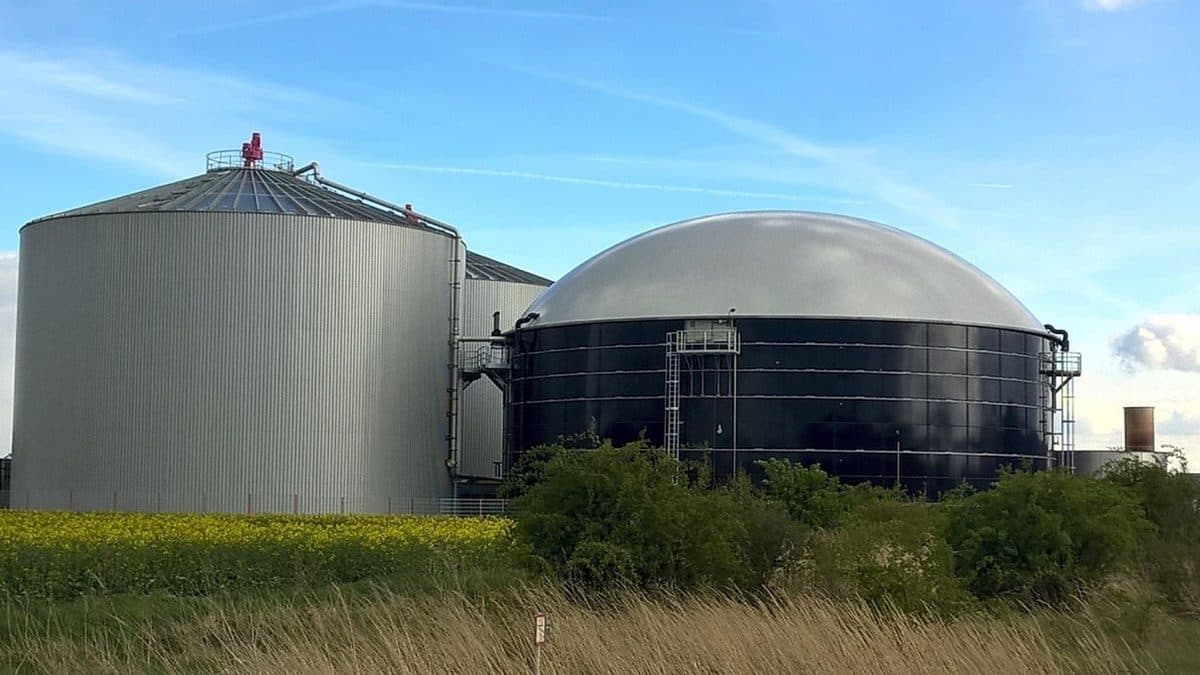
Announced in the Union Budget of February 2018 and rolled out by the Department of Drinking Water & Sanitation the same year, GOBARdhan (Galvanizing Organic Bio-Agro Resources Dhan) supports the conversion of cattle dung and agricultural waste into valuable products such as organic manure, biogas, and compressed biogas (CBG).
The scheme's broader goal is to scale up Compressed Biogas (CBG) production, attract significant private investment, and build a functioning circular bioeconomy across India. It is implemented under the Ministry of Petroleum and Natural Gas, which has unified the CBG value chain under a single framework to accelerate project development and provide greater certainty for investors and developers.
As India's demand for natural gas grows across transport, households, industry, and commerce, CBG offers a domestic alternative that can reduce dependence on imported fuels while strengthening the country's energy security.
The Six Pillars of GOBARdhan
1. Guaranteed Offtake
City Gas Distribution (CGD) companies will procure CBG to meet mandated blending targets—3% in FY 2026–27, 4% in FY 2027–28, and 5% from FY 2028–29 across both CNG and PNG segments. This creates a stable buyer base that producers can plan around.
2. Fixed Pricing
CBG is priced at ₹2,110/MMBTU under a government-backed pricing mechanism. The price is guaranteed for a minimum of ten years, providing long-term financial predictability while keeping fuel affordable for end users.
3. Capital Support
New and expanding CBG plants can receive financial assistance of up to ₹2 crore per TPD of capacity. The support extends beyond core plant infrastructure to include feedstock collection systems and manure-processing facilities, encouraging participation from MSMEs, cooperatives, and rural entrepreneurs.
4. Pipeline Infrastructure
Both shared and dedicated pipeline networks will connect CBG plants to trunk pipelines and City Gas Distribution networks, reducing transportation costs and improving market access.
5. Credit Guarantees
A risk-sharing mechanism is designed to improve access to institutional finance by reducing collateral requirements, particularly benefiting MSMEs, women entrepreneurs, and first-time developers.
6. Ecosystem Development Fund
A dedicated challenge fund will support district-level implementation through feedstock mapping, aggregation infrastructure, project planning, technology adoption, and capacity building.
Together, these six pillars position GOBARdhan as a comprehensive policy framework to make CBG commercially viable at scale while converting agricultural and organic waste into a dependable clean energy resource.
Who is Eligible?
The scheme supports multiple implementation models:
- Individual Household Model: Individual households identified by Gram Panchayats.
- Cluster Model: Groups of households (with a minimum of 3–4 cattle each) identified by Gram Panchayats in association with Cooperatives, Milk Unions, Farmer Producer Organisations (FPOs), SHGs, CBOs under DAY-NRLM, and private entrepreneurs.
- Community Model: Community-level projects identified by Gram Panchayats.
- Commercial Model: Entrepreneurs, cooperatives, gaushalas, dairies, and other organisations establishing large-scale biogas or CBG plants.
Priority is given to villages with high cattle populations.
Registration Process
Government entities, cooperatives, and private organisations operating—or intending to establish—a Biogas, Bio-CNG, or CBG plant can register through the Unified Registration Portal for GOBARdhan.
The portal serves as a single national repository for the sector and enables registered project developers to access existing and future support provided by various Ministries and Departments of the Government of India.
Carbon Credits: Why GOBARdhan Matters
Beyond clean energy generation, GOBARdhan creates opportunities for carbon credit generation through two primary mechanisms.
1. Avoided Methane Emissions
CBG plants divert cattle dung, agricultural residue, and other organic waste into anaerobic digestion instead of allowing them to decompose in the open. Since methane has a global warming potential 28–84 times greater than CO₂, avoiding these emissions forms the largest source of carbon credits.
2. Fossil Fuel Displacement
CBG replaces conventional fossil-based CNG, creating additional emissions reductions. Depending on the certification pathway and feedstock, projects may generate 16–25 carbon credits per tonne of Bio-CNG produced, with credit values typically ranging from ₹500–₹2,000 per tCO₂e.
Looking Ahead
GOBARdhan represents more than a waste management programme. It is a national strategy to convert organic waste into clean energy while strengthening rural livelihoods, attracting private investment, reducing greenhouse gas emissions, and accelerating India's transition towards a circular economy.
As India's carbon markets continue to mature, the scheme also presents significant opportunities for developers, investors, and carbon credit buyers seeking projects with measurable environmental and economic impact.
At Ploxi, we support organisations across the carbon project lifecycle—from project development and carbon certification to market access and carbon credit transactions. Whether you're looking to develop a CBG project under the GOBARdhan framework or source high-integrity carbon credits from verified projects, we'd be happy to start the conversation.
Get in touch:
📧 contact@ploxiconsult.com
Sources & Further Reading
- Government of India, Ministry of Jal Shakti, Department of Drinking Water and Sanitation. (n.d.). About GOBARdhan Initiative. GOBARdhan Unified Registration Portal. https://gobardhan.sbm.gov.in/about-us
- Prime Minister's Office. (2026, August 6). Cabinet approves GOBARdhan, India's National Unified Scheme for Compressed Biogas, with an outlay of ₹23,731 crore. Government of India. https://www.pmindia.gov.in/en/news_updates/cabinet-approves-gobardhan-indias-national-unified-scheme-for-compressed-biogas-with-an-outlay-of-rs-23731-crore/
- myScheme. (2026). GOBARdhan Scheme. Government of India, Digital India Corporation. https://www.myscheme.gov.in/schemes/gobardhan
- Council on Energy, Environment and Water (CEEW). (2025, July 7). How Can India Invest in Scaling Compressed Biogas? https://www.ceew.in/compressed-biogas
- Advance Biofuel. (2026, March 24). India's Gas Crisis: How CBG & Bio-LPG Secure Energy Future. https://advancebiofuel.in/cbg-bio-lpg-india-cooking-gas-security/
- Press Information Bureau, Ministry of Jal Shakti. (2023, June 1). Union Minister for Jal Shakti Launches Unified Registration Portal for GOBARdhan. Government of India. https://www.pib.gov.in/PressReleaseIframePage.aspx?PRID=1929116